
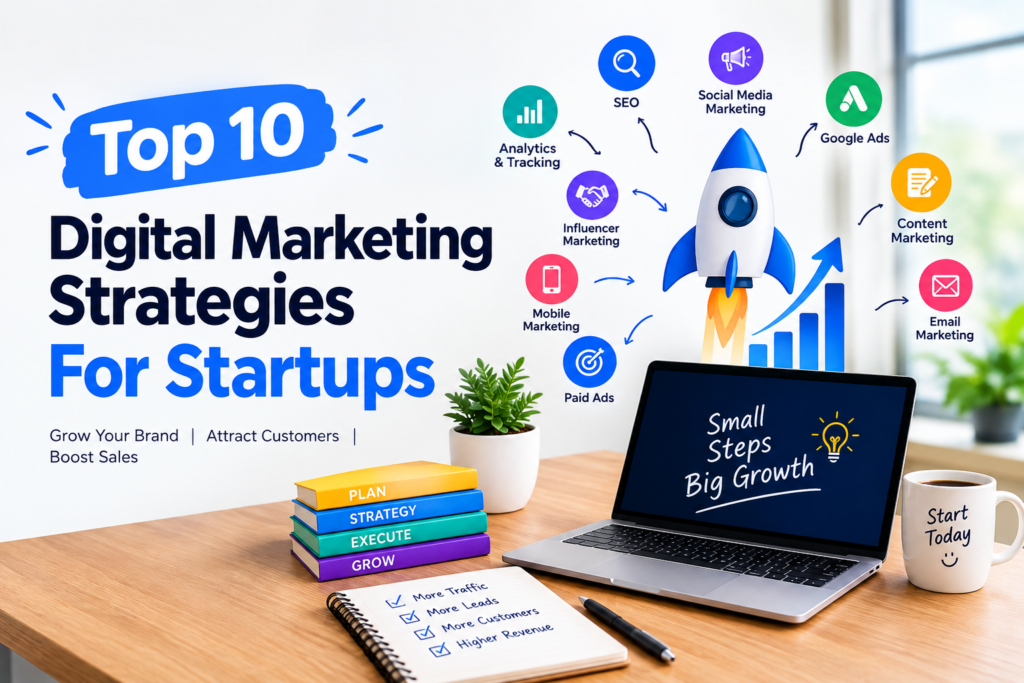
Starting a new business is exciting, but getting your brand noticed can be challenging. Startups often have limited budgets, small teams, and strong competition. This is where digital marketing strategies for startups can make a significant difference.
Digital marketing helps startups reach the right audience, build brand awareness, generate leads, and increase sales without requiring the large advertising budgets traditionally associated with marketing.
From SEO and content marketing to social media and paid advertising, startups can use several digital channels to build a strong online presence. The key is choosing strategies that match your business goals, target audience, and available resources.
In this guide, we explore the top 10 digital marketing strategies for startups that can help new businesses establish their brand and achieve sustainable online growth.
Why Digital Marketing Is Important For Startups
Digital marketing gives startups an opportunity to compete with established businesses by reaching potential customers online.
Customers today use search engines, social media platforms, websites, reviews, and online content before making purchasing decisions. A strong digital presence can help your startup appear where your potential customers are already searching.
Some important benefits of digital marketing for startups include:
-
Increased brand visibility
-
Better audience targeting
-
Cost-effective marketing
-
More website traffic
-
Lead generation
-
Customer engagement
-
Measurable marketing performance
-
Improved brand credibility
Now, let’s explore the top strategies your startup can use.
1. Build A Strong Business Website
Your website is the foundation of your digital marketing strategy. It acts as your online business identity and gives potential customers a place to learn about your products or services.
A startup website should be simple, professional, mobile-friendly, and easy to navigate.
Important website elements include:
-
Clear homepage
-
About Us page
-
Services or Products page
-
Contact Us page
-
Strong call-to-action buttons
-
Fast-loading pages
-
Mobile-friendly design
-
Clear business information
Your website should also communicate what makes your startup different from competitors.
For example, instead of simply saying “We provide digital marketing services,” explain how your services help businesses achieve specific goals such as generating leads, improving visibility, or building their online presence.
2. Invest In Search Engine Optimization
Search Engine Optimization (SEO) is one of the most important long-term digital marketing strategies for startups.
SEO helps your website appear in search engine results when potential customers search for products, services, or information related to your business.
Startups can focus on several areas of SEO, including:
On-Page SEO
Optimize important elements such as:
-
Page titles
-
Meta descriptions
-
Headings
-
URLs
-
Images
-
Internal links
-
Target keywords
Technical SEO
Make sure your website is technically accessible to search engines and provides a good user experience.
Off-Page SEO
Building relevant and trustworthy mentions and links can help strengthen your website’s authority over time.
SEO generally requires patience. Instead of expecting immediate results, startups should focus on consistently publishing useful content and improving their website.
3. Create Valuable Content Marketing
Content marketing is another powerful strategy for startups.
Instead of focusing only on promotional messages, create useful content that answers questions and solves problems for your target audience.
You can create:
-
Blog posts
-
Guides
-
Case studies
-
Videos
-
Infographics
-
Social media posts
-
Tutorials
-
FAQs
For example, a digital marketing startup could publish articles such as “How SEO Helps Small Businesses” or “How To Create A Social Media Strategy.”
High-quality content can help attract visitors through search engines and social media while establishing your brand as a useful source of information.
The goal should be to create content that provides genuine value rather than simply repeating keywords.
4. Use Social Media Marketing
Social media allows startups to connect directly with their target audience.
Platforms such as Instagram, Facebook, LinkedIn, and YouTube can be useful depending on your audience and business model.
A startup can use social media to:
-
Build brand awareness
-
Share educational content
-
Showcase products or services
-
Engage with customers
-
Share company updates
-
Generate website traffic
-
Build a community
Consistency is more important than posting randomly.
Create a simple content calendar and plan different types of content throughout the week. For example, you could publish educational posts, industry tips, behind-the-scenes content, customer stories, and short-form videos.
Choose platforms where your target customers are most active instead of trying to manage every platform at once.
5. Try Pay-Per-Click Advertising
Paid advertising can help startups reach potential customers faster.
Pay-Per-Click (PPC) advertising allows businesses to display ads on platforms such as Google and social media networks. Depending on the platform and campaign type, businesses can target audiences based on factors such as search intent, demographics, interests, or other available signals.
Startups should avoid spending their entire marketing budget without testing.
Instead:
-
Define a specific campaign goal.
-
Identify your target audience.
-
Create relevant advertisements.
-
Set a controlled budget.
-
Monitor campaign performance.
-
Test different messages and creatives.
-
Optimize based on results.
The objective is not simply to get clicks. Your campaigns should ultimately support meaningful business outcomes such as qualified leads, purchases, or enquiries.
6. Focus On Local SEO
If your startup serves customers in a specific city or geographic area, local SEO can be highly valuable.
Local SEO helps businesses improve their visibility for relevant location-based searches.
Startups should maintain accurate business information across relevant online profiles and directories.
Important local SEO activities include:
-
Optimizing your Google Business Profile
-
Maintaining consistent business information
-
Creating location-specific website content
-
Collecting genuine customer reviews
-
Building relevant local citations
-
Publishing locally relevant content
For example, a startup serving customers in Pune could create useful content related to its services and the Pune market.
Local SEO can help businesses connect with customers who are specifically searching for nearby products or services.
7. Use Email Marketing
Email marketing can help startups develop relationships with potential and existing customers.
Unlike social media platforms, email provides a direct communication channel with people who have chosen to receive messages from your business.
Startups can use email for:
-
Welcome emails
-
Newsletters
-
Product updates
-
Educational content
-
Special offers
-
Follow-ups
-
Customer communication
Avoid sending unnecessary emails. Focus on providing useful information and maintaining a consistent communication schedule.
A simple email strategy can start with collecting permission-based subscribers through your website and providing useful content that encourages people to stay connected with your brand.
8. Build A Strong Brand Identity
Digital marketing is not only about traffic and advertisements. Your startup also needs a recognizable brand.
A consistent brand identity can help customers remember your business and distinguish it from competitors.
Your brand identity can include:
-
Logo
-
Brand colors
-
Typography
-
Visual style
-
Tone of communication
-
Brand messaging
Make sure your website, social media profiles, advertisements, and other digital channels communicate a consistent identity.
A clear value proposition is equally important. Customers should quickly understand who you serve, what you offer, and why they should consider your business.
9. Use Analytics And Performance Tracking
One major advantage of digital marketing is that businesses can measure many aspects of their online performance.
Startups should track important metrics rather than relying only on likes or impressions.
Depending on your business goals, useful metrics may include:
-
Website traffic
-
Leads
-
Conversion rate
-
Cost per lead
-
Sales
-
Search visibility
-
Engagement
-
Email performance
-
Advertising performance
Tools such as Google Analytics and Google Search Console can provide useful website and search performance information.
Regular analysis helps startups understand what is working and where improvements may be needed.
For example, if a blog receives significant traffic but generates few enquiries, you might review its content, calls to action, page experience, and conversion path.
10. Develop A Long-Term Digital Marketing Plan
The final strategy is to create a realistic long-term marketing plan.
Many startups try multiple marketing channels at the same time without defining clear priorities. This can waste time and budget.
Instead, establish:
-
Clear marketing goals
-
Target audience
-
Primary marketing channels
-
Content plan
-
Advertising budget
-
Key performance indicators
-
Monthly review process
Start with a few strategies that are most relevant to your business. Once you understand their performance, you can gradually expand.
Digital marketing is not a one-time activity. Search trends, customer behavior, platforms, and competition continue to change. Regular testing and optimization are therefore important.
How Startups Can Choose The Right Digital Marketing Strategy
Not every strategy will work equally well for every startup.
Consider these questions before choosing your marketing channels:
Who is your target customer?
Understand their needs, interests, problems, and online behavior.
What is your primary goal?
Your objective could be brand awareness, website traffic, lead generation, sales, or customer retention.
What is your budget?
Choose strategies that fit your available resources. Organic strategies such as SEO and content marketing can complement paid advertising.
How will you measure success?
Define measurable KPIs before launching your campaigns.
A focused strategy is usually easier to manage than trying to use every digital marketing channel simultaneously.
Common Digital Marketing Mistakes Startups Should Avoid
Startups can make their marketing more effective by avoiding common mistakes.
Ignoring The Target Audience
Marketing messages should be created for a specific audience rather than trying to appeal to everyone.
Expecting Immediate SEO Results
SEO often takes time. Consistency and continuous improvement are important.
Posting Without A Strategy
Random social media posts may not support your business objectives. Create a content plan.
Focusing Only On Traffic
Website visitors are useful, but businesses should also consider leads, conversions, sales, and customer engagement.
Not Tracking Results
Without measurement, it becomes difficult to understand which activities are producing meaningful results.
Frequently Asked Questions
What is the best digital marketing strategy for startups?
There is no single strategy that works for every startup. The appropriate approach depends on the target audience, industry, goals, budget, and customer journey. SEO, content marketing, social media, email marketing, and paid advertising can all play different roles.
How much should a startup spend on digital marketing?
There is no universal budget. Startups should consider their revenue, goals, industry, customer acquisition costs, and available resources. It is generally useful to start with a controlled budget, measure results, and adjust spending based on performance.
Is SEO useful for new startups?
Yes. SEO can help startups build organic visibility for relevant searches. However, it usually requires consistent effort and should be treated as a long-term strategy.
Should startups use paid advertising?
Paid advertising can help startups reach targeted audiences quickly. However, campaigns should have clear objectives, controlled budgets, and ongoing performance measurement.
How long does digital marketing take to produce results?
The timeline varies by strategy. Paid campaigns can generate results quickly, while SEO, content marketing, and brand building generally require more time and consistent effort.
Conclusion
Digital marketing gives startups multiple ways to build visibility, connect with customers, generate leads, and grow their businesses.
The top 10 digital marketing strategies for startups discussed in this guide include building a strong website, investing in SEO, creating valuable content, using social media, testing paid advertising, focusing on local SEO, implementing email marketing, developing a strong brand, tracking analytics, and creating a long-term marketing plan.
The most important step is to start with clear goals and understand your audience. Instead of trying every marketing channel at once, focus on the strategies that are most relevant to your business and measure their performance consistently.
With a focused approach, useful content, continuous optimization, and a customer-first mindset, startups can build a stronger digital presence and create a foundation for sustainable online growth.
DNMarketing helps businesses understand and implement digital marketing strategies designed around their online growth goals. Whether you are building your first website, improving SEO, creating content, or exploring paid advertising, a structured digital marketing approach can help your startup move forward with greater clarity.